
Struggling With Parking? Here’s How to Improve Your Parking Skills
Good parking skills can help drivers reduce common parking errors, control the car better, and handle narrow spaces with greater confidence every day with care.
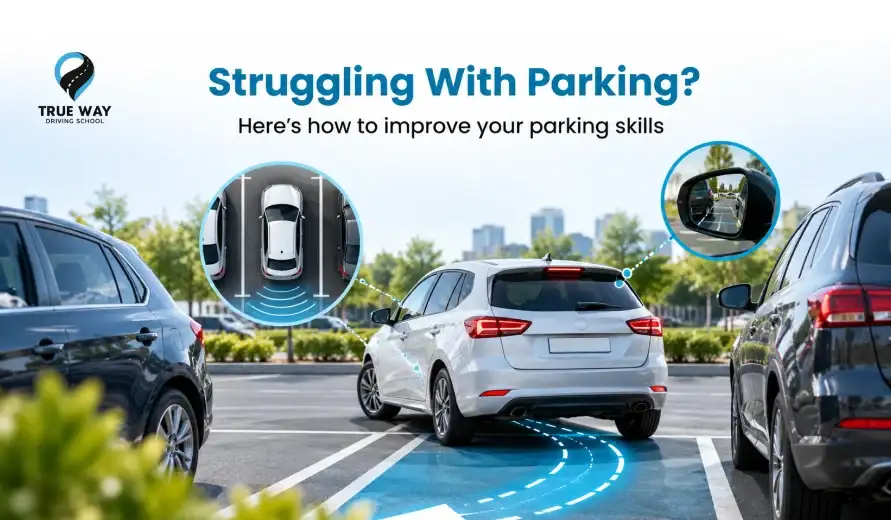
Good parking skills can make everyday driving less stressful, especially when you need to park on busy streets, in narrow spaces, shopping centres, or crowded car parks. Parking requires good steering control, careful observation, low-speed movement, and a clear understanding of the vehicle’s position. Many new drivers struggle with judging distance, turning the steering wheel at the right point, or reversing into a marked bay. These problems are common and can improve through regular car parking practice.
The key is to avoid rushing. A calm approach gives you more time to check mirrors, observe nearby vehicles, and make small corrections. With the right methods and repeated practice, parking can become a more comfortable part of everyday driving.
How to Improve Parking Skills With Better Vehicle Control
The first step in understanding how to improve parking skills is becoming comfortable with slow vehicle movement. Parking is very different from driving at normal road speed because small steering movements can have a noticeable effect on the vehicle.
Practise moving slowly while keeping both hands in a comfortable steering position. Use the brake gently and avoid sudden acceleration. When reversing, keep the vehicle at a speed that allows you to stop quickly if you notice an obstacle.
Manual-car drivers should also practise smooth clutch control at low speed. Automatic-car drivers can focus on brake control and gradual movement. The aim is to make the car move predictably rather than relying on sudden steering or braking.
Good vehicle control also makes it easier to position the car inside a marked parking bay. If the vehicle enters the space at the wrong angle, slow down and make a controlled correction instead of making several quick steering movements.
How to Improve Parking Skills by Using Mirrors
Mirrors provide important information about the position of your vehicle. Before starting a parking manoeuvre, check the interior mirror and both side mirrors. Continue checking them as the vehicle moves.
Side mirrors can help you judge the distance between your car and nearby vehicles, kerbs, walls, or parking lines. The interior mirror gives you a view of the area behind the car.
However, mirrors should not be your only source of information. Look around the vehicle when appropriate and check for pedestrians, cyclists, children, shopping trolleys, and vehicles entering the area.
One common mistake is looking at only one mirror while reversing. Try to check both sides and the area behind the vehicle. If you have a reversing camera or parking sensors, use them as additional assistance rather than depending on them alone.
How to Improve Parking Skills Through Regular Practice
Regular car parking practice can help you become more familiar with your vehicle's size, steering response, and turning area. Start in a quiet private area or an appropriate empty car park where you can practise without creating a hazard for other people.
Begin with simple forward parking. Focus on entering the marked space evenly and keeping enough distance from neighbouring vehicles. Once this feels comfortable, practise reversing into a bay.
Repeat the same manoeuvre several times. Pay attention to where the car begins to turn and how much steering is required. Repetition can help you recognise useful reference points without having to guess each time.
You can also practise parking from different starting positions. This helps you handle spaces where you cannot approach the bay from a perfect angle.
How to Park a Car Without Rushing
Knowing how to park a car starts with assessing the available space before moving into it. Check whether the space is wide enough and look for kerbs, walls, posts, pedestrians, and nearby vehicles.
Once the area is clear, position the vehicle correctly before beginning the manoeuvre. Move slowly and make gradual steering changes.
If the car is not centred in the space, do not panic. Stop if needed, check the surroundings, and reposition the vehicle.
Drivers sometimes feel pressured when another vehicle is waiting behind them. This can lead to rushed steering or poor observation. Take the time needed to park safely. A vehicle waiting for a few moments is less important than maintaining proper control.
Car Parking Tips for Everyday Situations
Following a few practical car parking tips can make everyday parking easier:
- Check the parking space before entering.
- Reduce speed before turning into the space.
- Check both side mirrors regularly.
- Watch for pedestrians and cyclists.
- Keep a safe gap from nearby vehicles.
- Avoid sudden steering movements.
- Stop and reposition if the vehicle is poorly aligned.
- Check your final position before leaving the vehicle.
The size and shape of the parking area can change how you approach it. A wide open car park may allow more room for correction, while a narrow street may require several careful movements.
Parking Techniques for Beginners
Parking techniques for beginners should start with simple manoeuvres before moving to more difficult situations. Forward parking is generally a useful starting point because the driver has a clearer view of the parking bay.
Once comfortable, practise reversing into a marked space. Focus on controlling speed, checking mirrors, and keeping the vehicle within the lines.
Angle parking can also be practised in suitable car parks. Enter the space slowly and check the position of the vehicle before stopping.
The goal is not to finish every manoeuvre quickly. The goal is to maintain control and understand where the vehicle is positioned throughout the process.
Parallel Parking Tips for Narrow Spaces
Parallel parking tips are particularly useful when parking beside a kerb on a street. This manoeuvre requires good observation and careful steering because the vehicle needs to enter a relatively narrow space.
Start by checking that the available space is suitable for your vehicle. Position the car correctly beside the vehicle ahead and begin reversing slowly.
As the rear of the car enters the space, make controlled steering adjustments. Continue checking the mirrors and surrounding area. When the vehicle becomes more parallel with the kerb, straighten the wheels and make any final positioning adjustments.
Do not worry if the first attempt is not perfect. If there is enough space and it is safe to do so, stop and reposition the vehicle.
Reverse Parking Tips for Marked Bays
Reverse parking tips can help when you need to place the vehicle neatly inside a marked bay. Before reversing, check the area behind and around the vehicle.
Position the car so you have enough room to begin the turn. Reverse slowly while monitoring the parking lines through the mirrors and camera if available.
If the vehicle starts getting too close to a line, stop and make a correction. Avoid continuing simply because you have already started the manoeuvre.
Once parked, check that the vehicle is reasonably centred and does not obstruct neighbouring spaces or traffic routes.
Common Parking Problems and How to Handle Them
One common problem is turning too early. This can cause the car to enter the space at an awkward angle. Another issue is turning too late, which may leave insufficient room for the vehicle to enter correctly.
Moving too quickly is another frequent problem. Higher speed reduces the time available for observation and correction.
Some drivers also focus too much on the vehicle behind them. Remember that parking should be controlled and deliberate. If another driver is waiting, allow them to wait rather than rushing.
Poor mirror adjustment can also make parking harder. Set the mirrors correctly before starting your journey so you have a useful view of the vehicle's sides and rear.
When Professional Instruction Can Help
If you continue to struggle with parking after repeated practice, a qualified driving instructor can provide practical guidance. An instructor can observe your steering, vehicle positioning, mirror checks, and speed control.
Professional instruction can be especially useful before a driving test. You can practise the parking manoeuvres required in your area and receive feedback on areas that need more work.
Practising with an instructor can also help you understand why a particular manoeuvre is not working instead of simply repeating the same movement.
Final Thoughts
Better parking skills come from patience, observation, vehicle control, and repeated practice. Start with simple parking situations and gradually practise more difficult spaces. Keep your speed low, check your surroundings, use your mirrors correctly, and make small steering corrections when needed.
Learning how to improve parking skills is mainly about building control and familiarity through consistent practice. Whether you are learning how to park a car, working on parallel parking tips, or practising reverse parking, a calm and methodical approach can make each manoeuvre easier to manage.
Parking does not have to be rushed. With regular practice and a consistent approach, you can become more comfortable with different parking situations and handle everyday parking with greater confidence.
About the author
Digittrix
Trueway Driving School
Frequently asked questions
Everything you need to know before your driving test.